
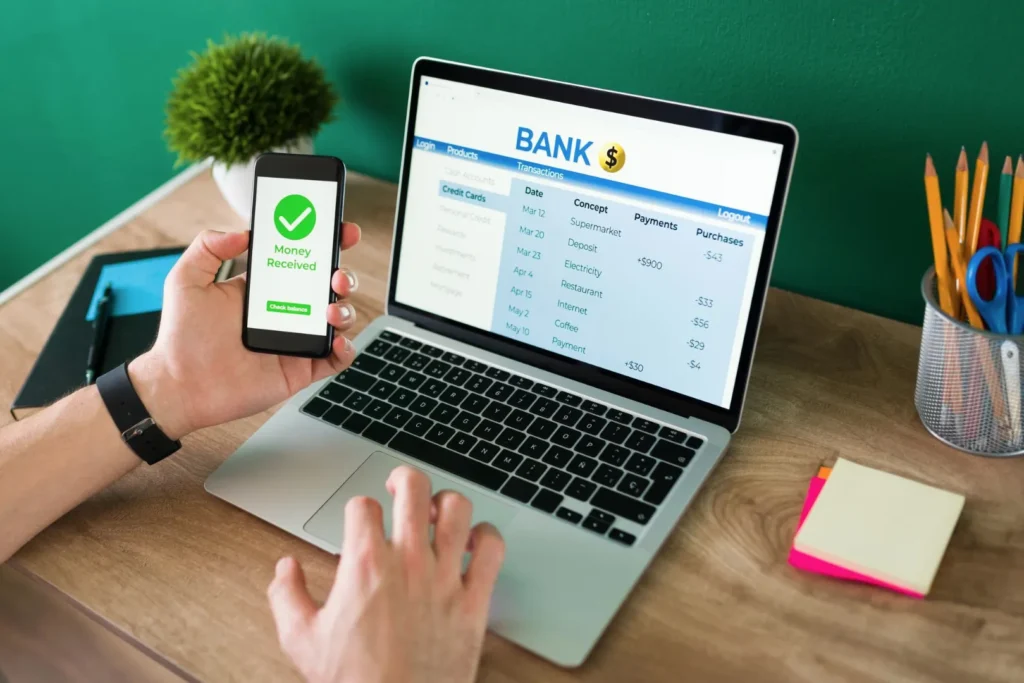
Pay by Bank, explained: how UK businesses are cutting fees and getting paid the same day
If you take payments from customers, you’ve almost certainly made peace with two annoyances you assume are just part of doing business. Card fees quietly skim a slice off every sale. And the money always seems to land in your account a day or two after you’ve actually done the work.
Neither is a law of nature. A newer way of taking payments usually called Pay by Bank, powered by Open Banking sidesteps both, and a growing number of UK small businesses are switching to it for exactly that reason. It’s worth understanding, because for a lot of businesses it’s simply cheaper and faster, and the setup is easier than you’d expect.
What Pay by Bank actually is
Open Banking is the framework, introduced by UK regulation, that lets you securely move money directly between bank accounts with the account holder’s permission. Pay by Bank is what that looks like at the checkout: instead of typing in a long card number, your customer taps a link or scans a QR code, their own banking app opens, they see exactly who they’re paying and how much, and they approve it with their thumbprint or Face ID. The money moves from their bank account to yours. No card details, no card machine, no card network sitting in the middle taking a cut.
From the customer’s side it feels faster and safer, because they’re authorising the payment inside the banking app they already trust rather than handing card details to a stranger. From your side, three things change and all three are in your favour.
The three things that change
The fee is lower. Card payments for a small business typically cost somewhere around 1.5% or more per transaction once you add up the various charges, and premium cards like Amex cost more again. Open Banking payments are generally priced well below that often around 1% because you’re not paying the card networks. On a £500 job, the difference between a card fee and a Pay by Bank fee is real money, and on big-ticket invoices it’s the difference that makes you look twice.
The money arrives the same day. With cards, your takings usually settle a couple of working days later, and the fees are quietly deducted before the money reaches you. Open Banking payments typically settle the same day and arrive in full; the amount the customer sent is the amount that lands, with fees invoiced separately rather than skimmed off each sale. For any business where cash flow matters (which is to say every small business) getting paid today instead of Thursday changes how the week feels.
There are no chargebacks. This is the one people underestimate. Because the customer actively authorised the payment in their own banking app, there’s no card network dispute process to reverse it later. Card payments carry chargebacks where a customer’s bank claws the money back and leaves you to prove the sale was legitimate and the burden of proof sits on you. With Pay by Bank, that whole category of risk and admin simply doesn’t apply.
“So why has nobody made me do this?”
A fair question, and the honest answer is about how the payments industry is structured, not about whether it’s good for you. Card machines and card processors have been the default for decades, they’re what everyone knows, and there’s a large industry built on those fees continuing. Open Banking is newer, so it’s had to earn its place. But the regulation, the bank support, and the customer familiarity are all now firmly in place most people have used their banking app to approve a payment without even realising that’s what Open Banking is.
It’s also worth being straight about the consumer-protection picture, because it’s changed recently and in customers’ favour. Since October 2024, UK banks are required to reimburse people who are tricked into authorising a bank transfer to a fraudster, up to a substantial limit. That closed the one genuine gap Pay by Bank used to have versus cards, and it’s why banks now stand behind these payments with real protection.
When cards still make sense
Pay by Bank isn’t about ripping out card payments and pretending they never existed it’s about not paying card fees when you don’t have to. Cards still matter for spontaneous, in-person purchases where the customer expects to tap and go, for certain online checkouts, and for customers who simply prefer them. The smart setup for most businesses is to offer both: lead with Pay by Bank for invoices, larger jobs, deposits and anything where you’re sending a payment request, and keep cards available for the moments they suit. You get the low fees and fast settlement where they add up, without turning any customer away.
The practical shape of this for a typical small business is a payment link or QR code you can drop into a text, a WhatsApp message, an emailed invoice, or print and stick on the counter. A tradesperson can send a link the moment a job’s done and watch the money arrive before they’ve packed up the van. An invoice-heavy business can attach a pay-by-bank link to every invoice and if you run your books through Xero, that can be automated so every invoice goes out with a one-tap payment option built in. No terminal to rent, no hardware, no waiting.
Where Buzz Tech fits
This is the side of the business we help with. Buzz Tech sets up TrustistTransfer the payments side of the Trustist ecosystem so you can take Pay by Bank and card payments through simple links and QR codes, get your money the same day on Open Banking, and skip the card machine entirely. Pricing starts well below typical card rates, there’s nothing to install, and you’re taking payments as soon as you’re set up.
If you’re curious whether it would actually save you money, the quickest way to find out is to look at what you paid in card fees last month then reply or book a short call and we’ll show you, honestly, what the same takings would have cost on Pay by Bank. No hard sell; if it doesn’t add up for your business, we’ll tell you.